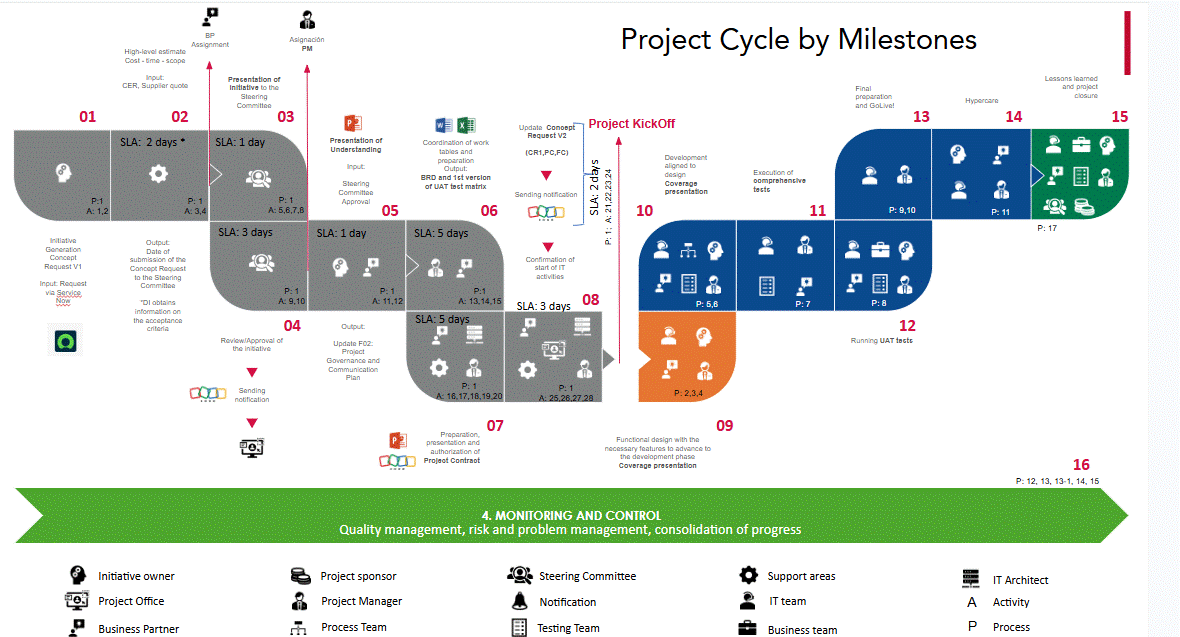

Process Map
Process Map


Project Steering Committee
- Responsible for validating, prioritizing and strategically monitoring the organization's initiatives and projects.
- Ensuring that projects are aligned with business objectives, resources are properly allocated, and high-impact risks are resolved in a timely manner.

Sponsor
- Authorizes, promotes, and formally endorses a project, ensuring that it is aligned with the organization's strategic objectives.
- Liaison between senior management and the project team, providing guidance, policy support, and resources for implementation.

Owner Initiative
- It is the figure responsible for representing the interests of the business within the life cycle of the project.
- Their main function is to ensure that the proposed initiative is aligned with the strategic objectives of the organization and that the product, service, or solution delivered complies with the provisions of the Business Case.

Business Partner
- It acts as the strategic and operational link between the business area and technology.
- Its main purpose is to translate business needs into viable technological solutions, ensuring that projects deliver value, meet business objectives and align with corporate strategy.
- Responsible for the functional vision of the project and ensure that the implemented technical solution effectively solves problems or improves business processes.

Technical Coordinator
- Technical and tactical are responsible for the construction, configuration, and technical quality of software components within technological projects.
- It translates functional designs and specifications into functional, stable, and efficient code, ensuring that developments meet the technical quality, safety and performance standards defined by the organization.

IT Project Leader
- Responsible for ensuring the correct technical execution of technological projects, aligning developments and configurations with quality, safety, and institutional regulatory standards.
- It acts as a liaison between the technical team, the Project Manager, and the stakeholders, ensuring that the solutions delivered meet the defined functional and non-functional requirements.

Project Management Office
- Institutional governing body and facilitator responsible for establishing, standardizing, governing, and continuously improving project management practices, methodologies, and tools.
- It maximizes the value delivered by the project portfolio, ensuring that they are executed in line with the corporate strategy, within the parameters of quality, time and cost defined, and under a unified and transparent governance framework.

Project Manager
- Responsible for the successful delivery of a project, acting as the integrative leader that ensures the fulfillment of objectives within the constraints of scope, time, cost, and quality.
- It plans, executes, monitors, controls, and closes initiatives aligned with the institutional strategy, guaranteeing the adoption of the methodology, the satisfaction of stakeholders and the generation of value for the organization.

Innovation Manager
- Responsible for leading the strategic relationship between the Information Technology area and the business areas, ensuring that the technology strategy is aligned with corporate objectives and generates tangible value.
- His role combines business vision, leadership, and technological knowledge, acting as a key strategic partner in the digital transformation of the organization.

Compliance
- XXXXX.

Architect
- Strategically responsible for the design, integrity and sustainability of the technological architecture that supports the projects and the operation of the business.
- Defines and safeguards the long-term technical vision, ensuring that the implemented solutions are scalable, secure, efficient, and aligned with corporate standards and IT strategy.

Infrastructure Leader
- Ensured the availability, stability, security, and scalability of the base technology platform (hardware, networks, servers, operating systems, cloud services) that supports business applications and services.
- Provides and manages the infrastructure resources necessary for the success of technological projects, ensuring that the development, testing, and production environments meet the requirements of performance, capacity, and internal and external regulations.

Tester
- Operationally responsible for the execution, documentation and reporting of verification and validation activities within the life cycle of technological projects.
- It identifies discrepancies between the actual behavior of the software and the established requirements (functional and non-functional), providing objective evidence on the quality and stability of the solution before its release to production.

Testing Leader
- Responsible for the strategy, planning, execution, and quality of the testing process within the life cycle of technological projects.
- It ensures that the solutions developed meet the functional and non-functional requirements and the defined quality standards, minimizing operational risks and defects before their release to production.

Project Cycle by Milestones