Steering Committee Information
Steering Committee Information
Objective

The Steering Committee is critical because it acts as the strategic governing body that ensures alignment between projects and organizational objectives.
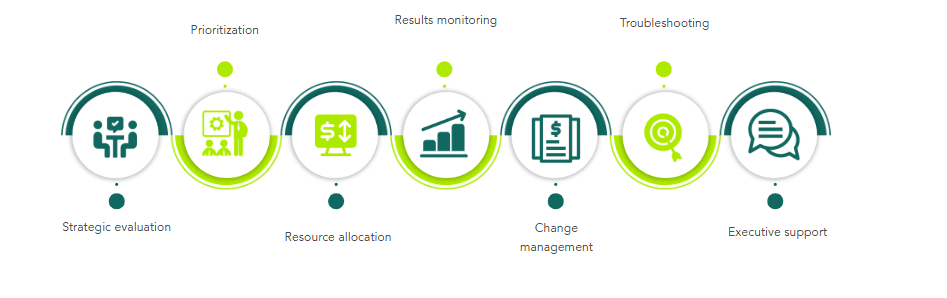
Governance and Strategic Oversight: Provides the strategic direction necessary for all projects to effectively contribute to the organization’s objectives.
High-Level Decision-Making: Resolves resource conflicts, approves significant changes to scope or budget, and makes critical decisions that impact multiple projects or the organization as a whole.
Legitimacy and Authority: Provides credibility and authority to the PMO, especially when it needs to implement standards, methodologies, or resolve organizational resistance.

Mario Sotres
Managing director
Ensures that strategic projects are aligned with the organization's vision, mission, and overall objectives, monitoring their impact on the business, driving organizational culture and business transformation, prioritizing strategic initiatives, fostering interdepartmental collaboration, and eliminating political or operational barriers that impact projects to ensure success.

Rodolfo Guerra
Finance Director/Sponsor
Ensures that initiatives, projects and programs are aligned with the business strategy, evaluates, prioritizes and authorizes the execution of projects based on criteria such as value, risk and cost, monitors the overall performance of the portfolio, guaranteeing an adequate balance of investments, optimizes the use of organizational resources and ensures the sustainability of the execution.

Hugo Álvarez
IT Director/Sponsor
Ensures that initiatives, projects, and programs are aligned with business strategy and evaluates the technical feasibility and technological impact of proposed initiatives aligned with business strategy.

Ophir Méndez
BPO
It governs the portfolio of initiatives, monitors agreements and the approval of initiatives, manages technical capabilities, as well as the availability of financial, human, and technological resources.

Paulina Islas
PMO
Manages the project portfolio, ensures the implementation of best practices in project management, analyzes and quantifies the impact on the project portfolio in terms of time and cost, and manages and identifies risks and issues.

Sponsors team
They represent the interests of the business, validate the project's viability, justification, and alignment with the organizational strategy, resolve escalations or conflicts within projects, monitor project progress according to KPIs, and drive project acceptance within the organization.
Héctor Lozano
Gustavo Salas

Silvia Isela Regalado
Alfonso Tenorio

Ramón Suárez

Maria Teresa Juárez
Maria Antonia Maraña
Francisco Rámirez
According to the Project Management Institute (PMI), the Steering Committee plays a crucial role in the governance of projects and initiatives.
Objectives
Objectives
Project Steering Committee Policies
1. Policies for the Approval of Initiatives
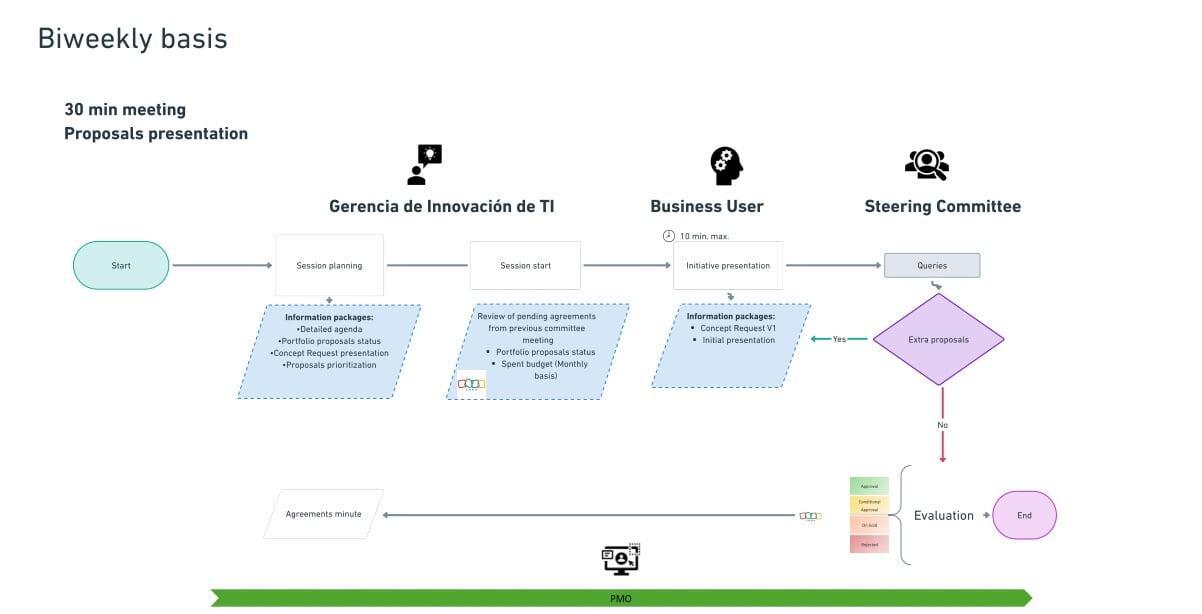
All initiatives must be formally presented through the Concept Request format, accompanied by the business justification and preliminary analysis of benefits, risks and costs.
The Steering Committee will be responsible for evaluating strategic alignment, technical and financial feasibility, as well as impact on the operation before granting approval.
No initiative may initiate the planning phase without formal approval registered in Concept Request (version 2).
The Committee will be able to prioritize initiatives according to the availability of resources, urgency of the business and expected value for the organization.
2. Policies for the Management of Project Change Requests
All change requests must be submitted in a documented form by the Project Manager/Business Partner, with the endorsement of the Sponsor, using the format established by the PMO.
The Steering Committee will analyze only the changes that::
Impact on the scope, time, cost or quality of the project.
Modify the original justification or expected benefits.
They imply significant reallocation of resources.
Requests for changes must be resolved in Committee sessions, being recorded in the corresponding minutes. (The IT Innovation Manager will be responsible for documenting the agreements of the committee sessions.)
No critical change may be implemented without the express authorization of the Committee.
3. Policies for Risk and Problem Management
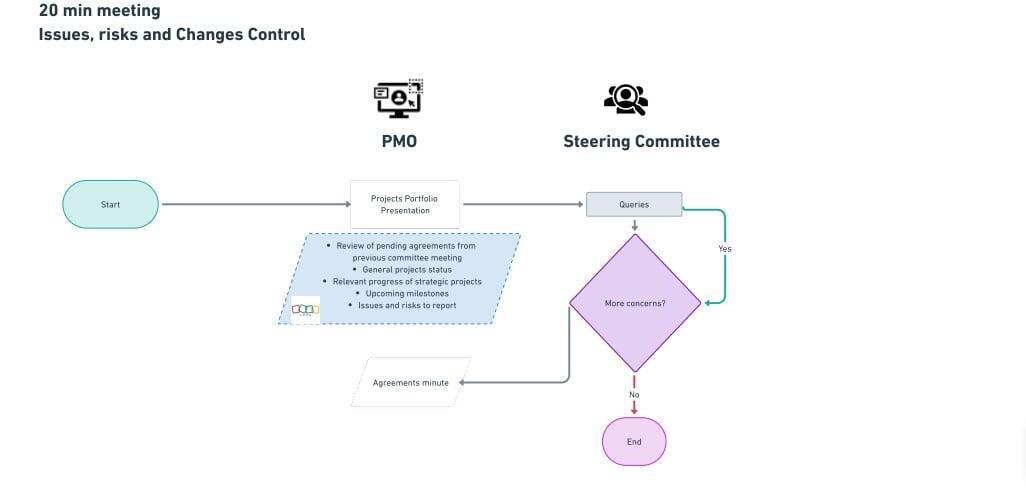
The Steering Committee will periodically review critical risks and problems escalated by Project Managers, Sponsors or the PMO.
Any risk identified with the potential to affect strategic objectives should include a documented and approved response plan.
The Committee will be responsible for:
Defining additional mitigation actions when the risks exceed the management capacity of the project team.
Authorize extraordinary resources for the attention of critical problems.
Make executive decisions to resolve interdepartmental or business conflicts.
The PMO will be responsible for consolidating and presenting executive reports of risks and problems at each Committee session.
4. General Provisions
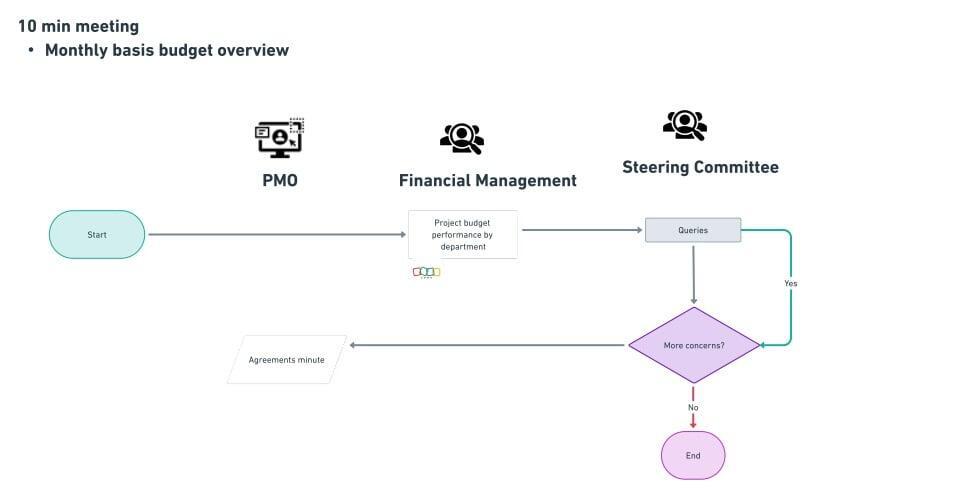
The decisions of the Committee must be formalized in minutes of the Session, with clear agreements, assigned persons responsible and dates of compliance.
The Committee must meet at least fortnightly, and extraordinarily when high-impact risks or problems arise.